
Most homeowners start looking for a pest control company only after something goes wrong, which means the decision gets made quickly and under stress. The company you pick will walk through your kitchen, attic, and yard with pesticides, so licensing, inspection habits, and treatment methods matter more than a low first quote. This post explains what to check, what to ask, and what good residential pest control looks like in St. Petersburg.
Florida regulates pest control closely, and those rules give you real tools for telling one provider from another. We cover licensing first, then inspections, treatment methods, termite work, maintenance plans, emergency availability, and safety around children and pets. If you want to see these questions answered at your own property, our free home and office inspections are the place to start.
Start With Florida Licensing, Not the Sales Pitch
Florida law makes it unlawful to operate a pest control business that the state has not licensed, according to Florida Statute 482.071. The same statute ties the license to a certified operator in charge, so a state-certified person must oversee the company’s pest control work. A licensed business in St. Petersburg must also carry the required liability insurance, which is why a company that cannot show proof of coverage deserves a second look.
Individual technicians need credentials too. Under Section 482.091, each employee who performs pest control must carry an identification card with a photo and signature, and must show it to customers on request. Ask the technician at your door to show that card before work begins, and note the vehicle and the business address while you are there.
The UF/IFAS homeowner guide adds two more checks: confirm the business address and phone number, and ask for the name of the company’s certified operator in charge. If nobody can name that person, the guide says it should be a concern. We expect customers to ask us both questions, and every one of our technicians is fully trained and certified.
You can also verify credentials yourself. The Florida Department of Agriculture and Consumer Services runs a public applicator search where you can look up licensed individuals by name or license number. Anyone hiring in St. Petersburg can run that check before the first visit, and a company that welcomes it has nothing to hide.
What a Proper Inspection Looks Like
A quote should come from an inspection, not from the square footage of your house. The UF/IFAS guide warns homeowners to be wary of companies that quote on house size alone, and it says quotes should be upfront, transparent, and in writing. A technician who prices a job from the driveway without opening a cabinet or checking an attic is guessing.
The inspector should check the places where pests hide, which means kitchens and bathrooms, attics and crawl spaces, door and window frames, the foundation line, and the yard. For bed bugs, the UF/IFAS bed bug profile describes hiding places in cracks and crevices of walls and furniture, behind wallpaper and paneling, and under carpeting. A quick glance at the mattress will not find those colonies.

Good companies also put their findings on paper. The UF/IFAS hiring advice says to look for a written inspection report with an action plan, and to insist on a quote based on inspection findings instead of a flat fee. Ask any company what its inspection covers and what you receive afterward.
Our free home and office inspections cover insect infestations, rodent activity, termite presence, potential entry points, moisture issues, and structural vulnerabilities, and our technicians use advanced equipment to find hidden pests. The inspection is the first step toward a plan that fits your property. It is offered to homes and offices across St. Petersburg and the surrounding counties.
Treatment Methods: Targeted Work Beats Broad Spraying
Ask whether the company follows integrated pest management, usually shortened to IPM. The EPA explains in its IPM principles that IPM is a series of evaluations, decisions, and controls instead of one method, built on setting action thresholds, monitoring and identifying pests, prevention, and control. Under that approach, broadcast spraying of non-specific pesticides is a last resort.
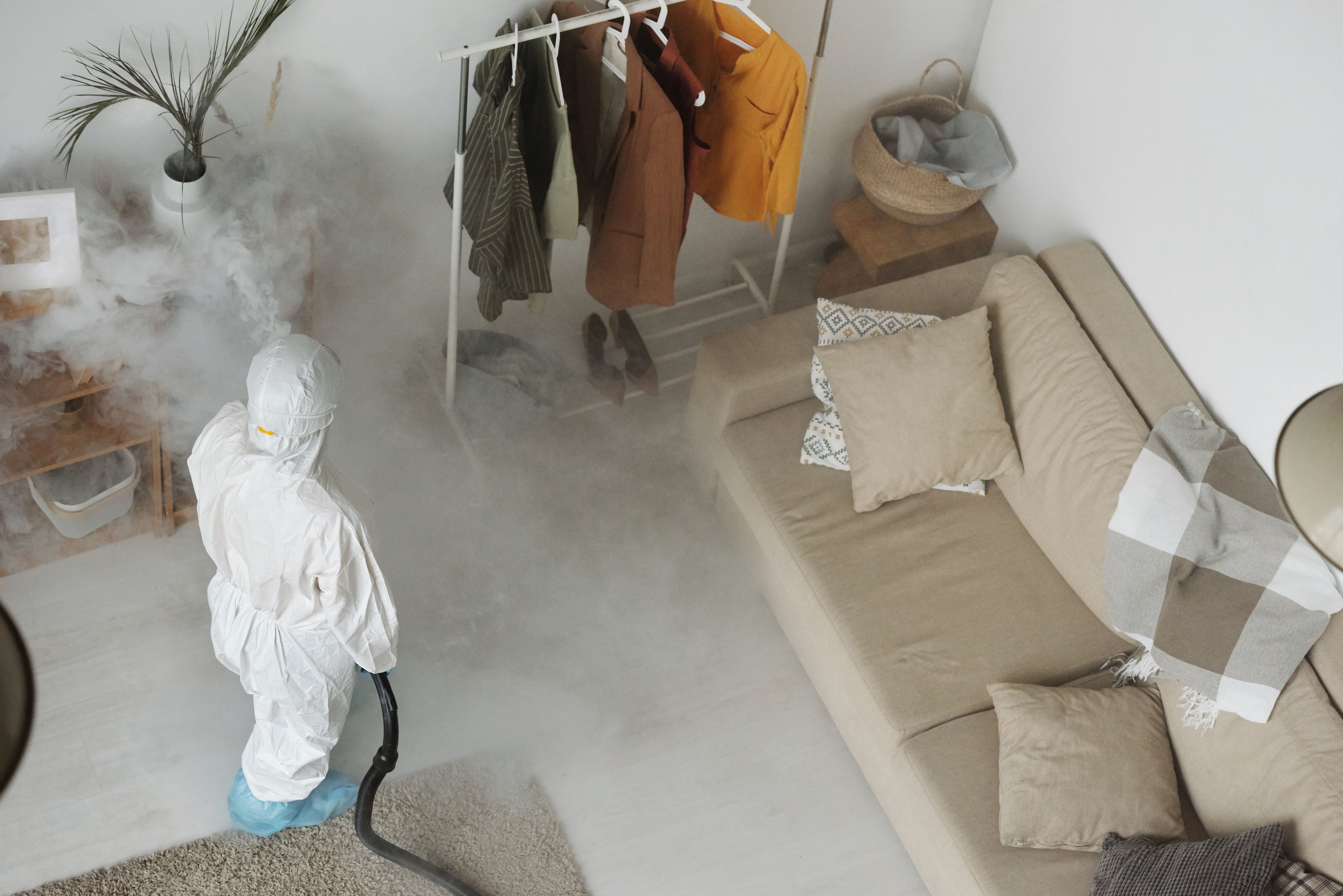
At home, that looks like identification first and treatment second. The EPA’s hiring advice says to ask a pest professional to find and correct the source of the problem before applying pesticides, and to request baits and crack and crevice treatments when feasible. The UF/IFAS guide notes that targeted treatments like these carry less exposure risk than broadcast applications.
A technician who sprays every room by default is working against that advice. Pesticide law does not allow a spray-everything service anyway, so a company that promises one is promising something it should not deliver. Ask what product will be used, where it will go, and what the follow-up visit will check.
Our own methods follow that targeted pattern. The maintenance plan uses micro-encapsulated treatment for baseboards, cracks, and crevices, gel bait for roaches and ants in cabinetry, and a foundation power spray three feet up and three feet out. Those steps put the treatment where pests travel and nest in Tampa Bay homes, not across every surface.
Termite and Wood-Destroying Organism Work Has Its Own Rules
Termite inspections tied to a home sale follow a separate set of requirements. Section 482.226 says a wood-destroying organism report for a real estate transaction must name the licensee, the inspection date, and the property address. It must also list areas that could not be inspected and why, identify any organisms and visible damage found, and record any treatment applied during the inspection.

The same statute says the report does not guarantee the absence of wood-destroying organisms unless it specifically states the extent of its guarantee. That detail matters when you read one. Look at which areas were marked inaccessible, since those are the places the inspection could not clear, and ask what the company recommends for them.
Employees who perform these inspections also need a special identification card under section 482.091 and must work under a certified operator in the termite and wood-destroying organisms category. We are certified to work with wood-destroying organisms, and we can provide the paperwork lenders require for mortgage approvals. If you are buying or selling in Tampa Bay, ask about timing early so the paperwork is ready when your lender needs it.
Maintenance Plans: Read What Is Actually Included
A plan is only as good as its written terms. UF/IFAS tells homeowners to ask about contract length, service frequency, guarantees, and what could void the contract, and to read every term and condition before signing. If the written quote does not list the services, ask for a version that does.

Our maintenance plans are built around once-a-year treatments that protect the home through the year. The plan includes dusting the attic with boric acid, micro-encapsulated treatment for baseboards, cracks, and crevices, gel bait for roaches and ants in cabinetry, and treatment for window frames, doorways, door jambs, and sliding glass door tracks. Florida rooms, patios, and garages are treated as needed.
The plan comes with a one-year written warranty that covers roaches, ants, spiders, and silverfish, and return trips carry no charge when they are needed. Use the same checklist on it as on any contract: what is treated, how often, what the warranty covers, and what happens when pests come back. We give free estimates across St. Petersburg, so you can see all of it in writing before you commit.
Emergency Availability and Response Time
Pests do not keep office hours. A bed bug discovery at night, a rodent in the pantry, or a wasp nest beside the front door cannot always wait for Monday morning. UF/IFAS reports that foggers are not effective for controlling bed bugs, so a late-night trip to the store can leave you with the same problem at sunrise.

Ask how a company handles emergencies and who answers the phone. Our phone line is answered 24 hours a day, and our rapid response team handles ant outbreaks, bed bug discoveries, cockroach invasions, rodent intrusions, wasp nests, flea problems, and mosquito swarms. Each emergency begins with a detailed property inspection to find entry points and nesting areas, and our treatments are safe for children and pets.
Rodents show why speed matters. The rat and mouse guide from UF/IFAS says rats and mice can carry at least 10 kinds of disease, contaminate ten times as much food as they eat, and start fires by gnawing electrical wiring. Rats fit through cracks about half an inch wide, so the entry points need to be found and sealed, not just the animals removed.
Mosquitoes follow a similar pattern. The CDC mosquito guidance says that if mosquitoes persist after you fix screens and clear standing water, a pest control professional may help. Our team covers St. Petersburg and the surrounding Tampa Bay counties at any hour, so a swarm does not have to wait.
What You Can Do at Home to Support Any Treatment
Even the best treatment works better when the property gives pests fewer places to live. The UF/IFAS guide advises sealing gaps around doors and windows, and it points out that a visible gap of light from outside signals an entry point. It also recommends keeping irrigation away from walls, trimming branches that touch the house, and clearing yard debris.
Moisture and food come next. Store food and paper goods in sealed containers, avoid leaving cardboard boxes indoors, and empty standing water around the yard. The CDC advises emptying and scrubbing containers that collect water once a week, including buckets, planters, birdbaths, and flowerpot saucers, because mosquitoes breed in any of them.
Treat pest control as ongoing maintenance instead of a single fix. The UF/IFAS guide makes the same point, and it is the reason a written plan with scheduled visits usually serves a St. Petersburg household better than a one-time spray. The technician handles the treatment, and your habits decide how often pests return.
Safety for Children, Pets, and Everyone at Home
Every company says its work is safe, so ask for specifics. The EPA recommends asking what the chemical is, requesting its safety data sheet, and recording the name and EPA registration number of every product used. A technician who can answer those questions at the door understands the product being applied.

The same EPA page tells households to keep pets and children away from areas where pesticides have been applied and to keep baits out of their reach. It also says to read and follow every label instruction. A good technician will explain which rooms to avoid and for how long, and will answer the question without hesitation.
Our pest control treatments are safe for children and pets, and we offer pet-safe pest control services for families who want the details explained. Tell the technician about dogs, cats, birds, and small children before work starts so the plan fits your household. That one conversation helps the technician plan around your household.
Questions to Ask Before You Sign
Bring a short list to the first visit. Ask who the certified operator in charge is, what the inspection covers, and whether the quote is written and based on what the technician found. Ask how long the contract runs, how often service happens, and what could void the guarantee.

Then ask how records are kept, whether you need to be home for each visit, and how technicians are trained. UF/IFAS lists all of these among the questions homeowners should raise. We answer every one of them directly, and we are glad to put the answers in writing.
Finally, ask about ownership and history. We have been family owned and operated in St. Petersburg since 1993, and we are a woman-owned business. A company that is proud of its record will share it plainly.
Make Your Choice With the Facts in Hand
A sound choice comes down to verified licensing, a real inspection, targeted treatment, clear written terms, and fast answers when something goes wrong. Suncoast Pest Control is a family owned and operated business that has served St. Petersburg since 1993, and we back our residential pest control work with free inspections and treatments that are safe for children and pets. Our termite inspection work includes the paperwork lenders ask for, and our commercial pest control covers offices and other businesses. Bring every question from this post to us, and contact us to schedule your visit.