
A wasp nest under the eaves looks small from the ground, and that is why many homeowners reach for a can of spray before checking what sits behind it. Nests tucked inside soffits are hard to size from below, and the sting risk grows with every step up a ladder. This post explains where nests form, what UF/IFAS says about handling them, and when to stop and call for help.
For safe wasp removal, the key decisions are where the nest sits and whether anyone in your home is allergic. Our wasp removal service covers nests that are too high, too hidden, or too close to a doorway, and it is one of several pest control services we handle.
Where Wasps Build and What a Nest Looks Like
UF/IFAS describes nests under eaves and in tree hollows, made of paper-like hexagonal comb. Check the porch ceilings, eaves, soffit vents, and railing undersides of your St. Petersburg home, where nests stay out of the rain. The insects are not particularly aggressive, but they sting when threatened.
A nest near a door or walkway puts people in the threatened range simply by walking past. Look for wasps flying in and out of a small gap, since a soffit nest may show only that opening. Keep children and pets away from the area until the nest is dealt with.
Why Spraying Without a Plan Can Go Wrong
The same UF/IFAS publication says nests are easiest to destroy in the evening, tells readers to follow the product label and wear protective gear, and warns against using aerosols near flames. It also says a single-queen nest can be knocked down with a broom. That advice assumes a small, reachable nest and a calm, prepared homeowner.
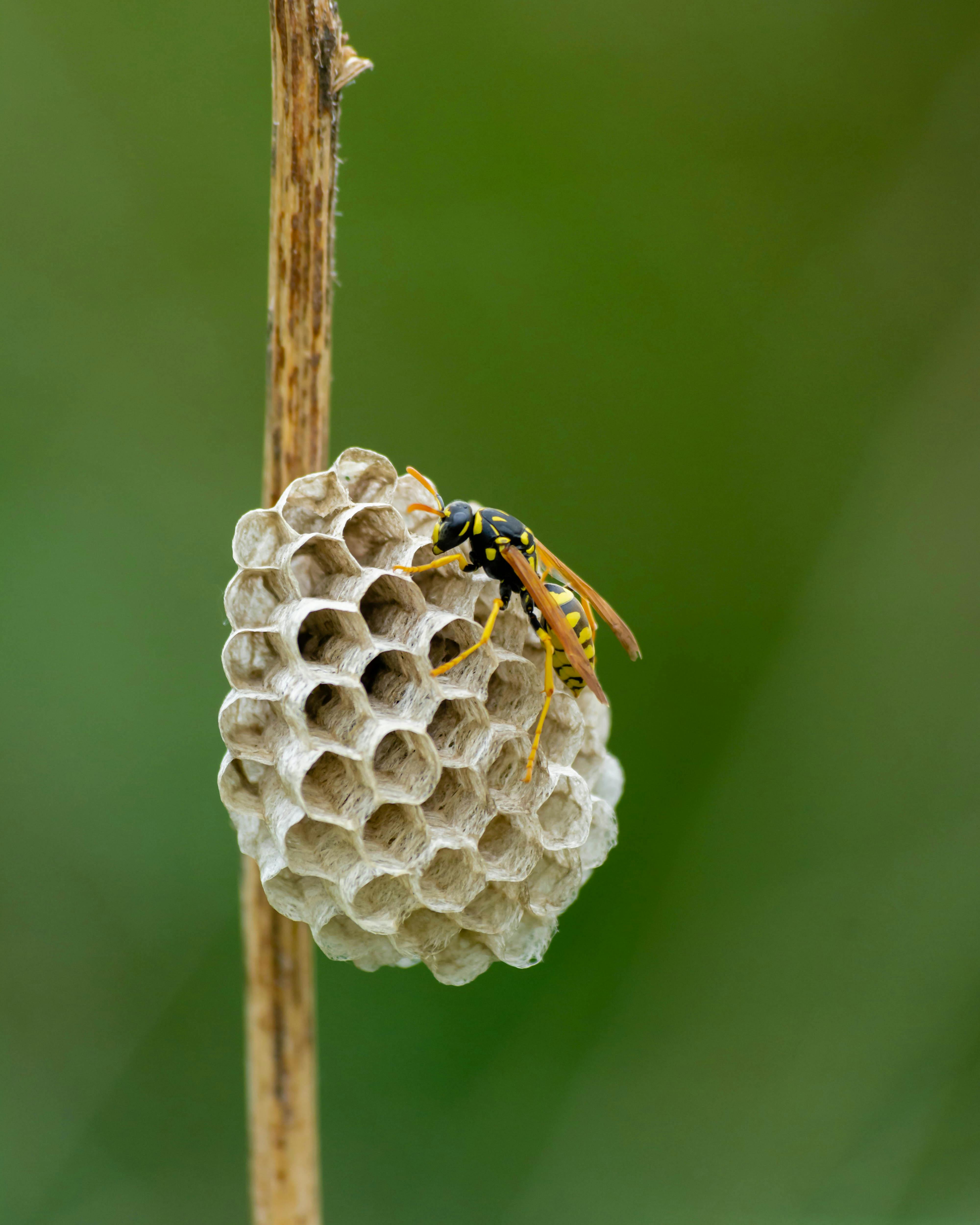
Real situations are often harder. A nest under a second-story eave in a St. Petersburg neighborhood needs a ladder, and a ladder is a poor place to be when wasps respond. A nest inside a soffit cannot be reached without opening the space. UF/IFAS yellow jacket guidance adds that allergic reactions matter most and that some nests are hidden underground.
When to Call a Professional
Call when the nest sits above ladder height, inside a wall or soffit, or near an entrance, or when anyone at home has a known allergy. The same goes for any case where you cannot see the whole nest. A technician brings protective gear and tools for tight spaces, and works on the nest itself instead of one visible section.
After the nest is gone, seal the gap or soffit opening so a new colony does not move in, and check nearby eaves for new starts. We offer free home and office inspections, with 24/7 emergency service when a nest blocks a door.
Leave the Hard Nests to a Professional
A small nest within easy reach is one thing, and a nest inside a soffit is another. Suncoast Pest Control is a family-owned and operated company in St. Petersburg, and our fully trained and certified technicians treat wasp nests as an emergency when needed. Contact us to schedule your visit, and ask about bed bug treatment if bites keep showing up. Our rat control covers attics and walls. We also offer commercial pest control for offices.